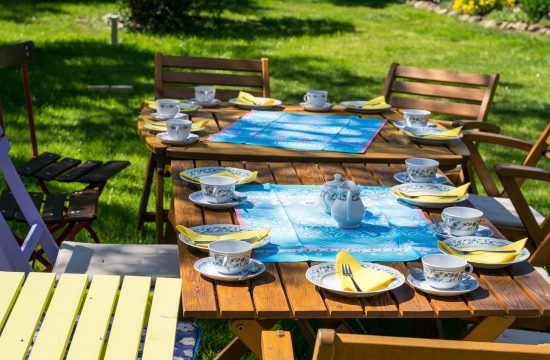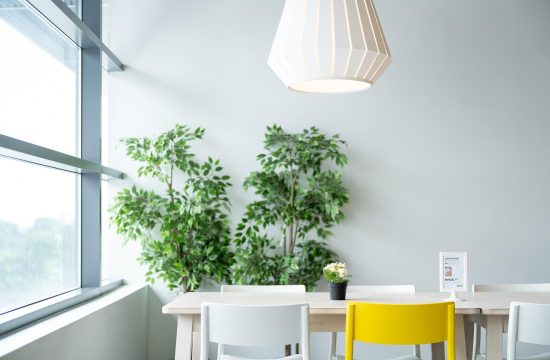
If backyard furniture looks like it–s good enough for the house, that–s because it is
BY CAROL POLSKY
When it’s spring, a homeowner’s fancy turns to the outdoors. And nowadays, that fancy can be fancy indeed.
The trend is toward furnishing the backyard and verandas with as much style and comfort as indoors. And increasingly, it’s hard to tell outdoor furniture from indoor, as outdoor fabrics gain in popularity and sophistication, new materials and finishes mimic those found indoors, and stores offer a host of new products.
Instead of nylon strap folding chairs, think deeply cushioned sectionals and lounge chairs, oversized dining tables (some with dark wood finishes and turned legs), outdoor projection screens and canopied beds.
“The types of furnishings we’re putting outdoors is getting as expensive as the furniture we’re putting indoors, both contemporary and traditional,” says Roseanne diSalvo, of diSalvo Interiors in Garden City. “It doesn’t look like your grandmother’s furniture, that’s for sure.”
Even last year, outdoor rooms weren’t as extensive as those her firm is doing this year, she says. “It’s gotten to the point where a lot of thought is going into the outdoors. It’s another extension of the home.”
Five years ago, the typical outdoor dining set purchased by a Long Island homeowner had a 48-inch table, round or square, and cost maybe $500, says a longtime merchandizing executive at Fortunoff, who, because of company policy, asked not to be identified by name. Now, the store (which recently opened its third outdoor furniture store on Long Island, in addition to its main store in Westbury) is selling many rectangular and round tables, 60 inches round or as long as 84 inches in glass and 133 inches in cast aluminum, with eight to 10 chairs, at a cost upward of $1,500.
Though the store used to offer two or three choices in wicker for dining and seating, now there are 20. And the percentage of customers buying a dining set who also buy a seating group has more than doubled during the past five years, from one in 25 to one in 10, he says.
“I just stand there sometimes and scratch my head: Would I spend $20,000 on my backyard furniture? We’re finding that more and more people are,” he said. “As merchants, we have to decide if we’re going to buy [a product], and over the past couple of years, we keep reaching higher and the customers are right there reaching higher with us.
“People can easily spend $20,000 on dining and seating together,” he continues. “They want something more elaborate, more in keeping with the type of environment that they are creating in the backyard.”
Fresh-air kitchens, bars
According to an informal survey of its members, the American Society of Landscape Architects says the top request this year coming from homeowners was for firepits and fireplaces, and for complete outdoor rooms like kitchens and bars for entertaining. Ditto a survey from the American Institute of Architects, which notes that two-thirds of architects saw increased calls for outdoor kitchens, patios and decks.
That architecture comes with more extensive seating groups and more elaborate settings. DiSalvo says one of her designers was working on a job in Manhasset for which she’d ordered two double chaises, two sofas, six armchairs and “she hasn’t even gotten to the side tables and accessories.”
Homeowners have lots to choose from, of course: indoor-outdoor rugs (including one new natural fiber that looks like a pile carpet), floor and table lamps with shades, a Ming cocktail table in teak, tents and pavilions, sheer and embroidered drapes, vases and chandeliers, and even outdoor art meant to hang on outdoor walls. Fabrics include faux leathers, velvets and chenilles. Daybeds come with drawers, bolsters and canopies, and four posters, with waterproof mattresses, are queen size.
Traditional styles in wicker, teak, wrought-iron (and wrought-iron looks in cast-aluminum) and poolside slingbacks remain popular on Long Island. But indoor looks are available in dark wood finishes, sleek contemporary polyethylene and cast-aluminum with wood-look finishes. Some designers offer collections in both indoor and outdoor versions, such as that from Filipino designer Kenneth Cobonpue, whose company makes pieces in rattan, wicker or abaca rope for indoors, and polyethylene and steel for outdoor use.
Pottery Barn’s new spring offerings include a line of outdoor furniture called Bali Rustic Teak, with the kind of dark wood finish and turned wood legs that one might expect to see indoors. Its teen stores are selling a wood platform with projection screen (electronics not included) so the kids can watch DVDs outdoors.
Turning decor inside out
The national chain’s senior vice president for product development, Celia Tejada, says “the sky’s the limit” when it comes to outdoor spaces: “You can do pretty much everything there that you do indoors.
“It’s a seamless experience between indoor and outdoor living,” she says. And that means new durable finishes that look just like the ones a customer might prefer indoors, and products for living, dining, entertaining, lounging and even working in a home office, she says.
There are definitely “fabulous sleeping areas” and “practical” entertainment centers, dining room sideboards, “games for outdoors, beanbags for outdoors. … I can tell you endless things you’ll be seeing coming out in the next few years.”
Pottery Barn certainly isn’t alone in looking to expand its outdoor offerings. With the public’s growing awareness and interest in design trends, style is on tap at virtually any price, from the very affordable at Kmart, Sears, Home Depot and Target on up to Pottery Barn, Restoration Hardware, Fortunoff, Room and Board, and outdoor specialty stores, to the most expensive high-end to-the-trade collections where a dining chair may go for thousands of dollars and look like a million.
Jane Hamley Wells, whose self-named, 3-year-old Chicago-based company markets some of that sophisticated outdoor design, says architects and designers didn’t even realize that one of her collections was an outdoor line when it was introduced last year. “People are just as comfortable using it indoors as outdoors,” she says. “The barriers between indoor and outdoors are rapidly being removed, and we are seeing that across the board, at mass-market retail and at the high end. People want to make the most of their property.
“The designers,” she adds, “are choosing materials that have the flexibility to be used indoors or out, but the intent is to design a beautiful piece of furniture, not garden furniture. It’s much more sophisticated than that today.”
Outdoor chairs go indoors
“As a designer, I like my outdoor space to feel like it’s part of my living space,” says Muttontown designer Kim Hendrickson-Radovich. “I think fabrics play an important part in bringing the indoors out. Once a piece is upholstered, it’s a whole other piece of furniture, rather than that old, traditional wrought-iron furniture…. There are so many beautiful, sophisticated designs now.”
She has an upholstered settee with tasseled pillows on a front veranda. She plans to create an outdoor dining space as well, with a glass- or stone-top table draped in layers of cloth, dishes and napkins. “No paper on that table,” she says.
Some of the new outdoor furniture easily makes the transition indoors as well, to conservatories, to casual family rooms and, as in Hendrickson-Radovich’s home, to a breakfast room opening onto a veranda.
She uses four of designer Oscar de la Renta’s white painted wood outdoor chairs for Century Furniture, on an indoor-outdoor rug, in her breakfast room.