How to get the best products at the best prices
Summer may be ending, but take heart: This weekend’s Labor Day sales could make your outdoor entertaining a lot more
lavish for less. Retailers are clearing out summer inventory and slashing prices on most items you’ll need to host a backyard barbecue or pool party.
Watch out for the gotchas, however. Low prices don’t guarantee a good grill, a stable patio chair, a powerful pressure washer for cleaning your deck, or a deck treatment that stands up to sunlight. Here are some shopping tips from our on-staff experts:
GAS GRILLS
Getting a good gas grill is becoming easier and cheaper as competition heats up; some of the best we tested cost $200 or less. (See our Ratings, available to subscribers.) You’ll also find $500 grills with the added style, space, and convenience of the much pricier models. To get the best deal for your money:
Consider your cooking. Grills with wide or thick stainless or cast-iron grates tend to be best at searing and browning quickly to seal in juices–essential for meats and fish. Wide grates also leave the wide grill marks barbecue buffs crave. A caveat: Heavy grates can take longer to heat up. For large crowds, look for a large grill with lots of grilling, shelf, and storage space.
Check the burners. These distribute the gas and flames. They’re also a gas grill’s most-replaced part. Main burners with a warranty for 10 years or more are likely to last longest. Recessed side burners are also a plus, because some can accept a griddle and others include one. If you don’t cover your grill, look for a side burner with its own cover.
See how it’s built. Make sure the rolling cart that supports the firebox and lid doesn’t rattle when shaken. If you want a stainless-steel grill and you’re picky about stains, look for stainless fasteners and better, 300-series stainless (bring a magnet to the store; it won’t stick to the higher-grade stuff). Or consider buying a grill made of cheaper, 400-series stainless and protecting it from stains and corrosion with a cover (about $40 to $50).
For more tips, see our free gas grills buying advice.
PATIO FURNITURE
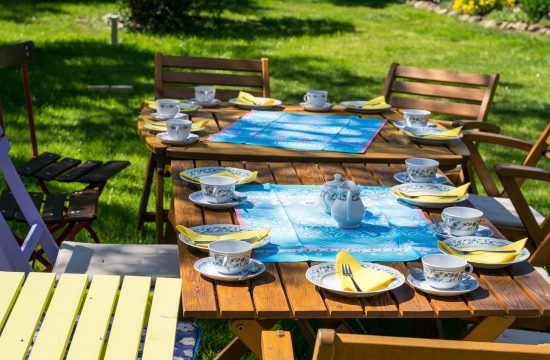
The humble patio has become an “outdoor room†for eating and entertaining, and homeowners are spending more to furnish it with more stylish and sumptuous chairs, tables, and chaise longues.
The good news: In our outdoor furniture Ratings (available to subscribers), we found that you can get well-made, stylish outdoor furniture without spending a fortune. Figure on between $200 and $300 for a dining table and four chairs from a mass-market retailer, and about $1,000 or more if they’re from high-end brands.
Consider maintenance. Routine washing with warm, soapy water works for most outdoor furniture, including aluminum pieces. It’s okay to hose down plastic wicker, but it’s a good idea to keep water away from genuine wicker. Unfinished teak will weather to a silvery gray on its own. Teak is an oily wood used for ship decking and other marine applications, so rain won’t harm it. But if you want to preserve its rich, golden-brown color, you’ll have to sand it and apply teak oil annually. Steel and wrought iron need to be painted to fend off rust. You can cover them to keep rain away, but be sure to uncover them when the skies clear to keep condensation from causing corrosion.
Check chair and table comfort. Sit in chairs to get a feel for fit and comfort. Pull them to the table as you would for dining. Then make these checks for both:
• Does the seat height seem right for the table height? A table that feels too high or too low can put a crimp in your next outdoor gathering.
• Do table legs provide enough clearance to prevent bumped knees? And does the tabletop have enough overhang to pull chairs close for comfortable eating?
• Are armrests matched to the table height, or are they too high to pull chairs close enough? Are they comfortable? Wide, flat armrests are generally better, though width can depend on material.
• Are chair seats roomy side to side and front to back? Are chair backs slanted at a comfortable angle? How good are the cushions? They should fit the seats properly and have ample padding.
Inspect in-store samples carefully. Checking these details can tell you a lot about the overall quality of the furniture:
• Does wood furniture have closely fitted joints? Gaps where table legs join the table skirt and ill-fitting stretchers that connect the front and rear chair legs are bad signs.
• Are welded joints on metal furniture neat and unobtrusive? Best are welds that have been ground smooth and coated to match the rest of the piece.
• Is the finish evenly and carefully done? Wood should be sanded smooth all over, not just on tabletops and armrests. Painted surfaces should be uniform, with no drips, ripples, or missed spots. Also check for sharp, unfinished edges on metal furniture under table edges, where knees may touch, and beneath armrests.
• Are nuts and bolts hidden or capped to protect them from moisture? Are exposed fasteners made of stainless steel to resist rust?
For more tips, see our free patio furniture buying advice.
PRESSURE WASHERS
Pressure washers let you blast away deck mildew, driveway stains, and other grunge a hose can’t touch. They also clean chairs, siding, and other items more quickly and easily than you could with a scrub brush. For as little as $90 for electric machines and $300 for gas, owning one is a tempting alternative to renting one for $50 to $90 per day. Here’s what to look for.
Don’t buy solely on specs. Retailers and manufacturers often push lofty numbers for water pressure and volume. Some talk about “cleaning units,†which are simply the pressure multiplied by the volume. But as shown in our Ratings (available to subscribers), some top-performing machines had less of both than lower-scoring models.
Look for convenience. A soap tank saves you the hassle of using separate containers. Tool and cord storage is a plus, as are wheels for heavier models.
Check the nozzle. Adjustable nozzles are more convenient than replaceable nozzles; a twist is all it takes to change spray width or pressure. But replaceable nozzles let you customize the spray pattern with specific spray angles.
Should you buy a gas or an electric pressure washer? While gas models tend to work faster and don’t need a power cord, electrics are easier to maintain. For tips on choosing and using both safely, see our free report on pressure washer types and pressure washer safety.
DECK TREATMENTS
A good deck treatment will save you the trouble of buying and applying a fresh coat every year. In our Ratings (available to subscribers) we found that of the three finishes, opaque tends to last longest. Here’s what else you need to know:
Opaque finishes hide the wood grain like a coat of paint and last longest. Best for: Typical decks made of pressure-treated pine, where grain isn’t important. Opaque finishes, usually solid-color treatments, hold up for at least three years and are the most economical. On the downside: Opaque finishes can build up a film, especially after several coats, which can peel, chip, and crack.
Semitransparent finishes usually contain a small amount of pigment but let the wood grain show. Best for: Pricier woods you want to show off, such as cedar or redwood. Some are almost opaque, however, and all change the color of the wood after treatment. On the downside: A semitransparent finish may need to be reapplied every two to three years.
Clear treatments contain water repellents but no pigment. They may also have UV inhibitors to help protect the wood. Best for: People who value seeing the natural wood grain over a long-lasting finish. On the downside: Years of testing have shown that most clear deck finishes don’t last more than one year, making them the most labor-intensive.